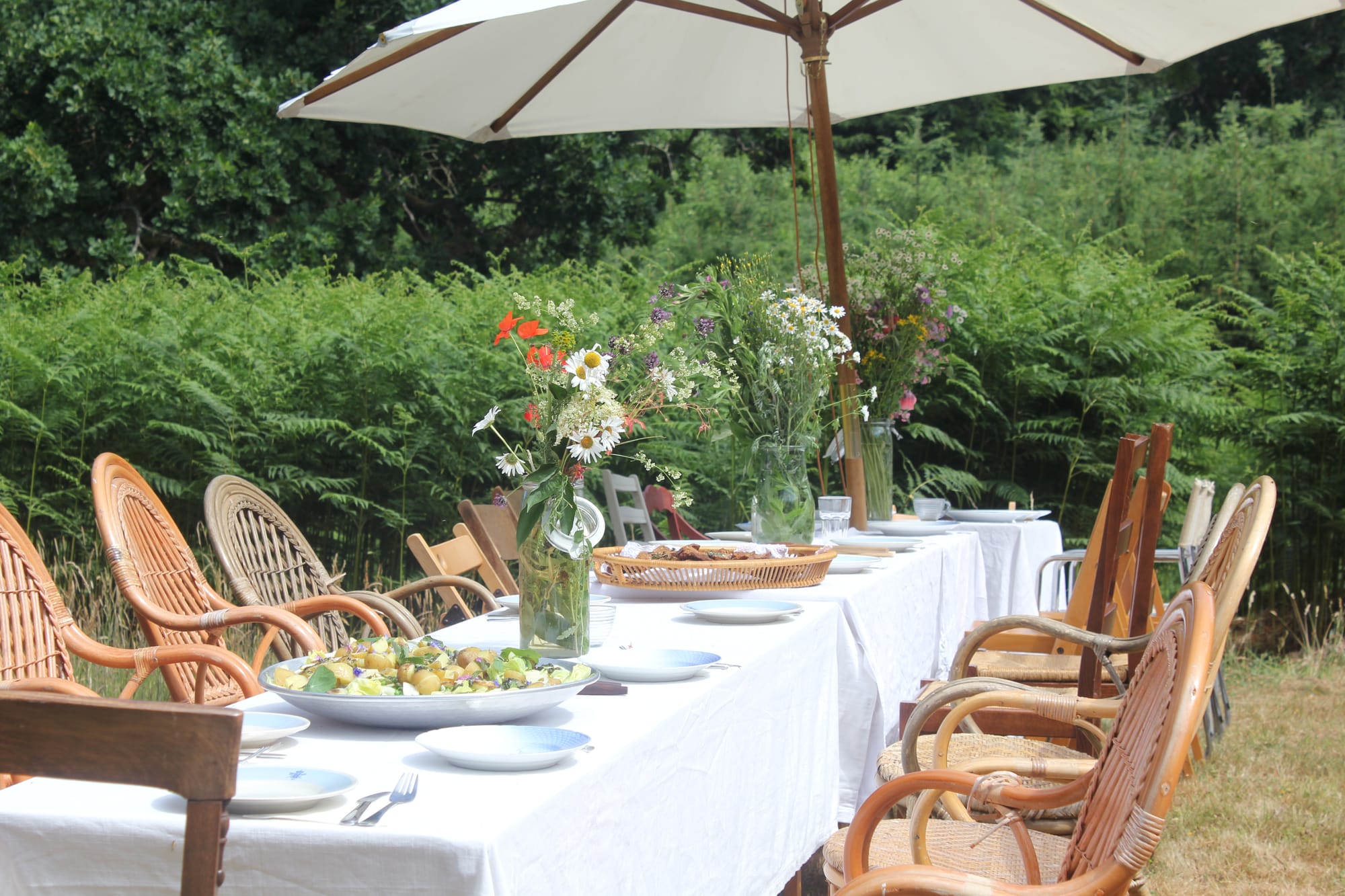
FERMENTING / OXIDIZING TEA

This recipe was written by Paulina Gretkierewicz from Applied Poetry after her workshop in Skovhaven Summer 2023
"Fermenting", or enzymatic oxidation:
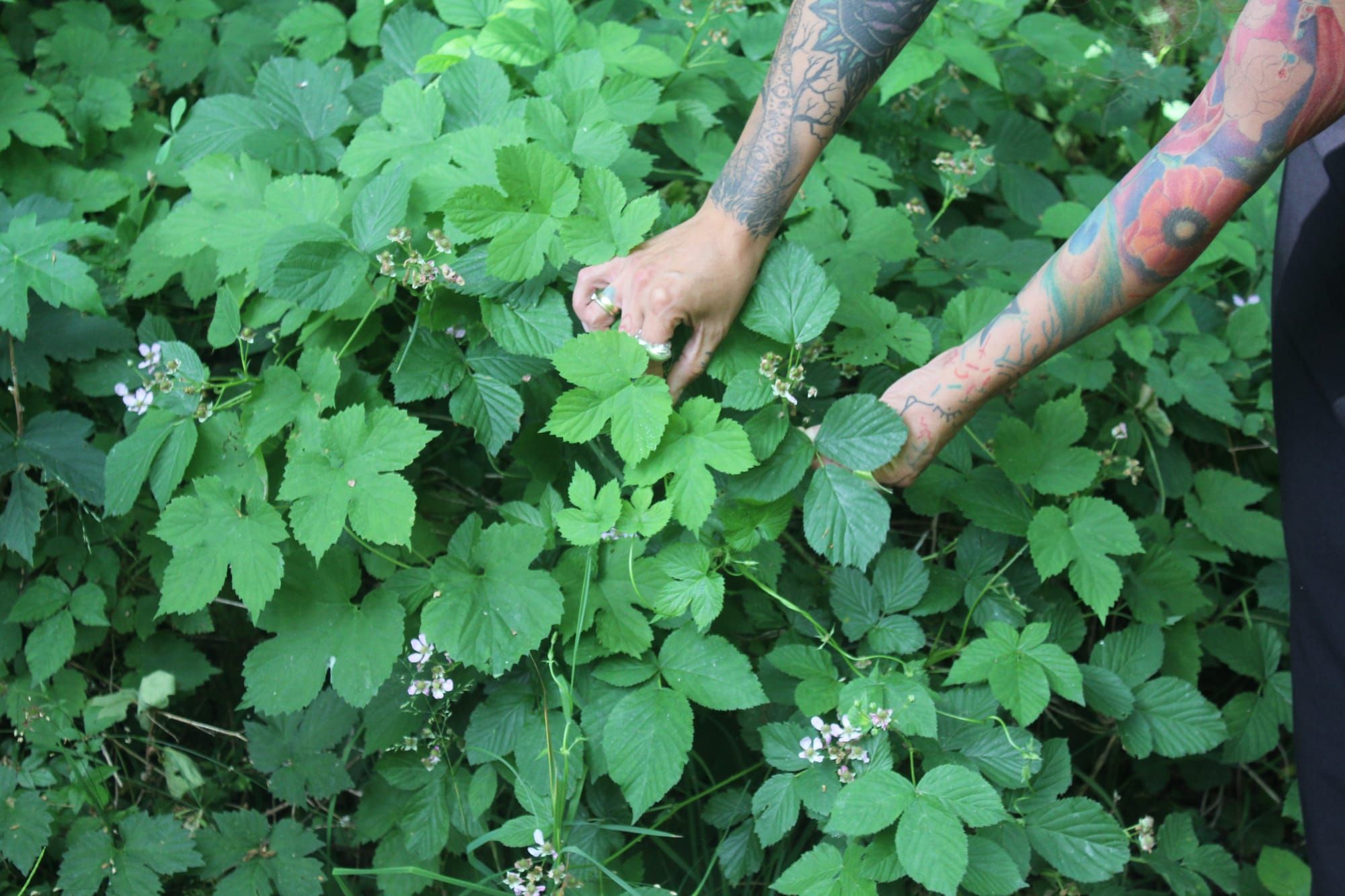
- Find edible leaves of your choice - research to make sure they are safe to eat, but think berries and fruit and consider the ones you already know; Apples, Mirabelles, Cherries, Blackberries, Raspberries, Black Currant, Flowering Currant, Fig.
2. Pick respectfully and only as much as you actually need. Try to find a place away from very heavy traffic and you are good.
3. Bring goods home, pick them of the stems. Wash them gently and make sure you dry them properly - pro tip - use salad spinner to remove excess water. Leave them out on a table overnight (or for some hours) to wilt. They should loose elasticity and become "limp" for a lack of a better word.
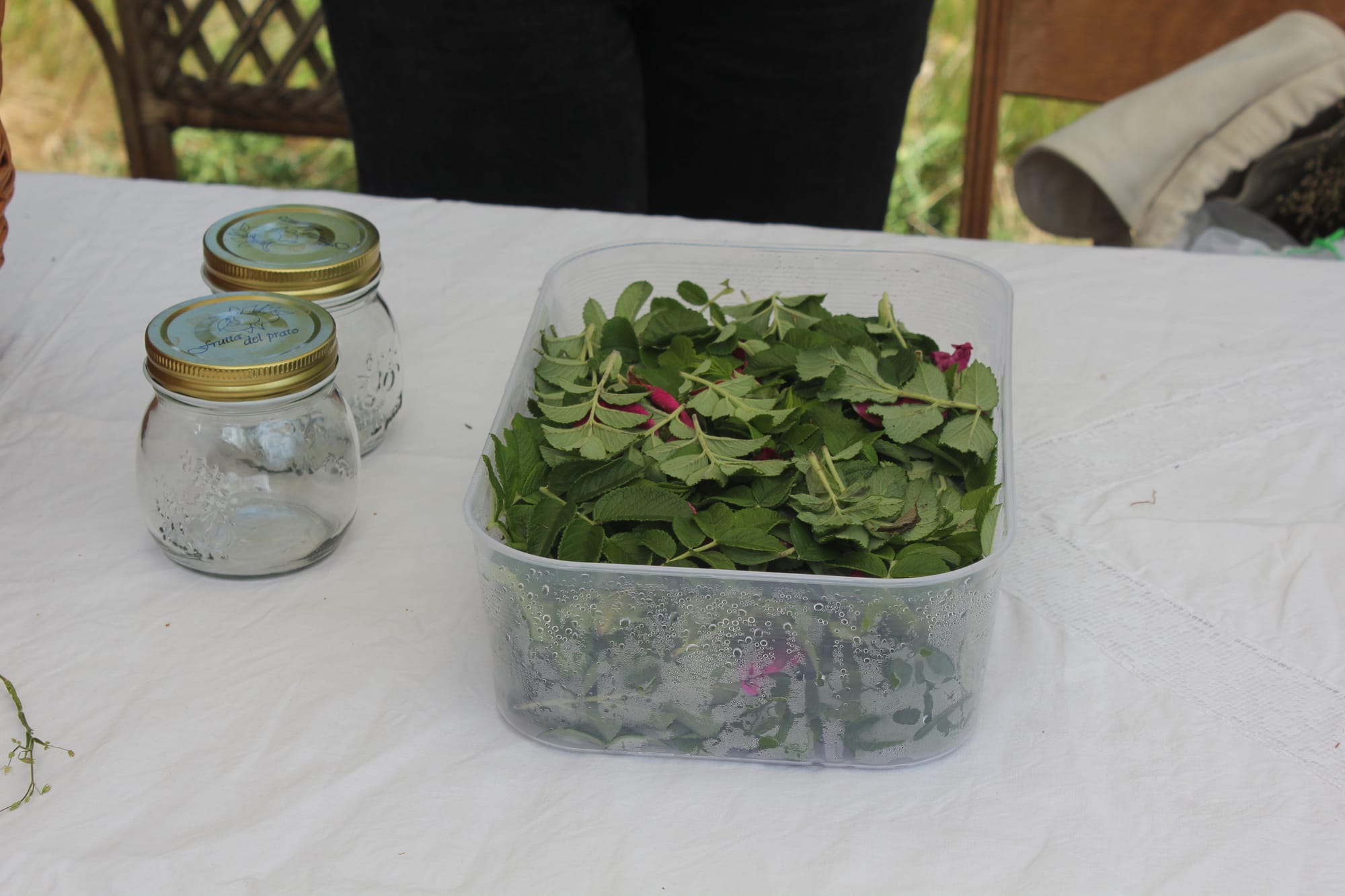
4. Get rolling. Bruise them using your hands or a rolling pin.
(You can finish your process after this and dry your herbs without the later steps, the flavour will be less intense than what will happen if you continue, but it can also be a nice "quick" trick for getting best out of leaves even if you don't have much time)
5. Stuff them in a jar tightly. You can close the jar tight or keep it open only covering it with a towel. The difference is again flavour. If you keep the jar open, your oxidation starts now. If you close it - it will happen after you open it).
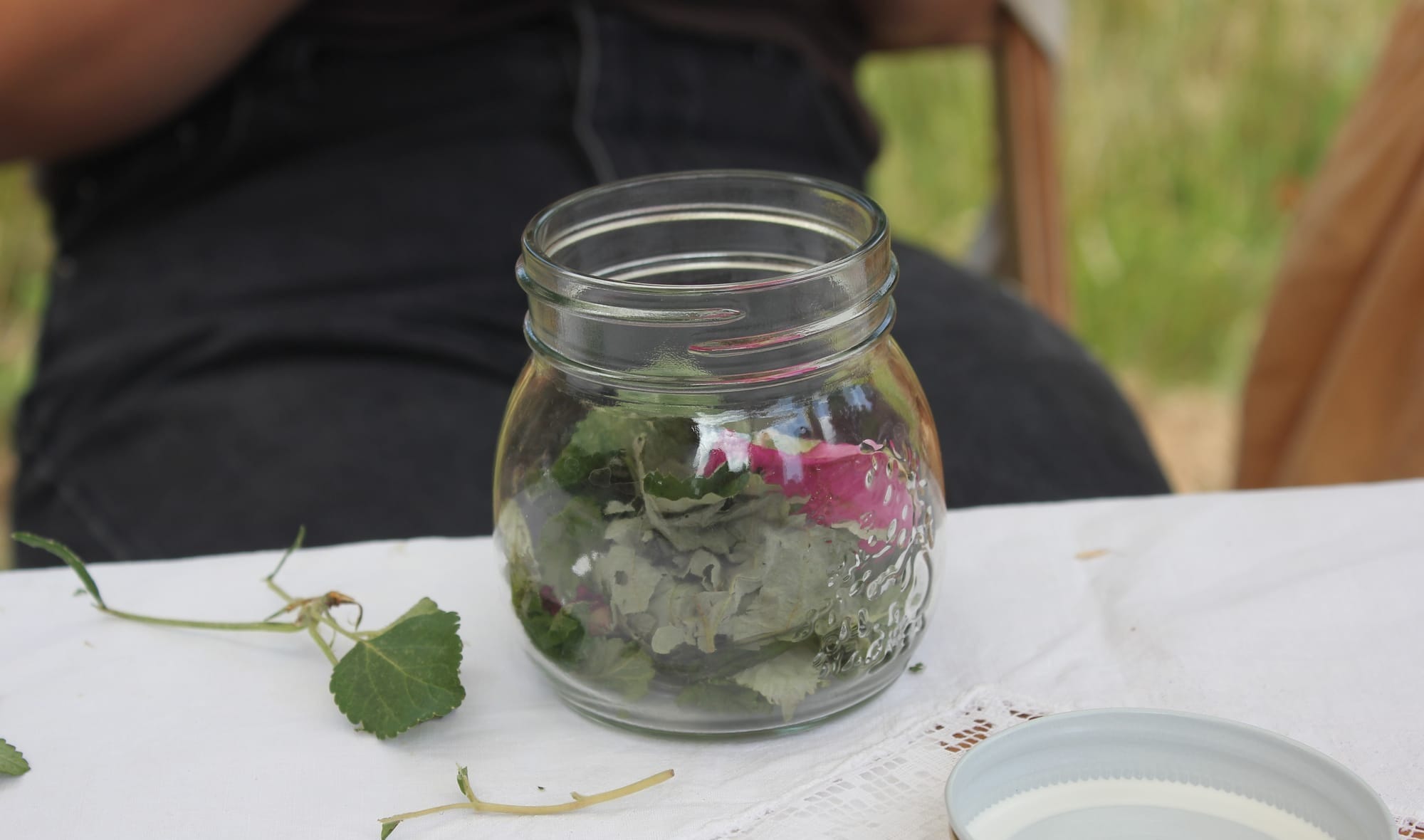
6. Put it in the sunny window, or in an oven on 50C, or in a car on a really warm day. If you have a dyhadrator that can fit a jar, you can put it in for 50C. This can take any time from 2-12 hours. The difference is again flavour.
7. Take your herbs out of the jar, spread them properly and make sure there is no mold. If you closed your jar beforehand, once you open it your herbs will start browning now. You can dry them laid out on a newspaper on a table in a well ventilated room. If you choose to do that, your tea will mature overtime and change flavour a little bit.
8. You can dry your tea in an oven or a dehydrator. If you dry them that way (in temp around 60C and higher) - there is not much maturing happening afterwards, so you can just enjoy your tea the way it taste now.
9. Put it in a jar and enjoy your creation. Your herbs should sound crunchy and be dry to the touch. They should also be kind of brown, depending of how much you bruised them. You can mix the with plants that you dried without oxidizing; adding a bit of dried edible flowers is a good idea to elevate the flavour and give it a bit of an extra depth, and visual upgrade. Roses, Cornflower, Calendula, Linden - all are very lovely companions.
That's it - that's the process. Traditionally this has been done in some parts of the world to mimc tea, that was waaay to expensive for normal people to buy. One of the best examples is actually Fireweed - so if you decide to go on a beach and see some Fireweed growing you can follow this process and make something that is called Ivan Chai. I know it by making Lilac tea, so next year when the May comes you can make a spectacular Lilac "fermented" tea.